Wild Patagonia: Hiking at the End of the World
At the far edge of the world, Chilean and Argentinian Patagonia unfolds in raw, breathtaking grandeur. Towering granite spires, turquoise glaciers, and windswept plains turn every hike into an encounter with the untamed. Here, trails lead through silence broken only by wind and ice, inviting you to slow down and feel small. Patagonia isn’t just a destination, it’s a journey into the wild.
Sunrise at Las Torres
What’s the story, where is Patagonia?
Patagonia is a vast, wild region at the southern tip of South America, stretching across both Chile and Argentina, from the Andes mountains all the way to the Atlantic and Pacific coasts. It’s a land of dramatic contrasts: jagged granite peaks, massive glaciers, turquoise lakes, endless windswept plains, and some of the most remote hiking trails on the planet.
Historically, Patagonia was home to Indigenous peoples such as the Tehuelche and Mapuche long before European explorers arrived. Ferdinand Magellan sailed along its coastline in 1520, and the region later gained a reputation as a mysterious, untamed frontier at the “end of the world.” Harsh weather, isolation, and vast distances kept Patagonia sparsely populated for centuries, a big part of why it still feels so raw and untouched today. For hikers and adventurers, that sense of remoteness is exactly what makes Patagonia so unforgettable.
What we did and how we did it
We spent two weeks in Patagonia and still felt like we only scratched the surface. With limited time, we focused on two of the most iconic areas in the region: Torres del Paine National Park in Chile and Los Glaciares National Park in Argentina. To round out the trip, we also tacked on a few additional days in Mendoza on our return journey, a very different pace, but a perfect way to finish.
We travelled in December, summertime in the southern hemisphere, to give ourselves the best chance of decent hiking weather. That said, Patagonia does not play by normal weather rules, even in summer conditions can change quickly, and the famous Patagonian winds can mess with your plans. We treked Torres del Paine over the Christmas week (2024), one of the busiest times of year due to local and international holiday travel. Surprisingly, the trails never felt overcrowded, and we actually loved the bonus of a lively, social atmosphere in the refugios each evening.
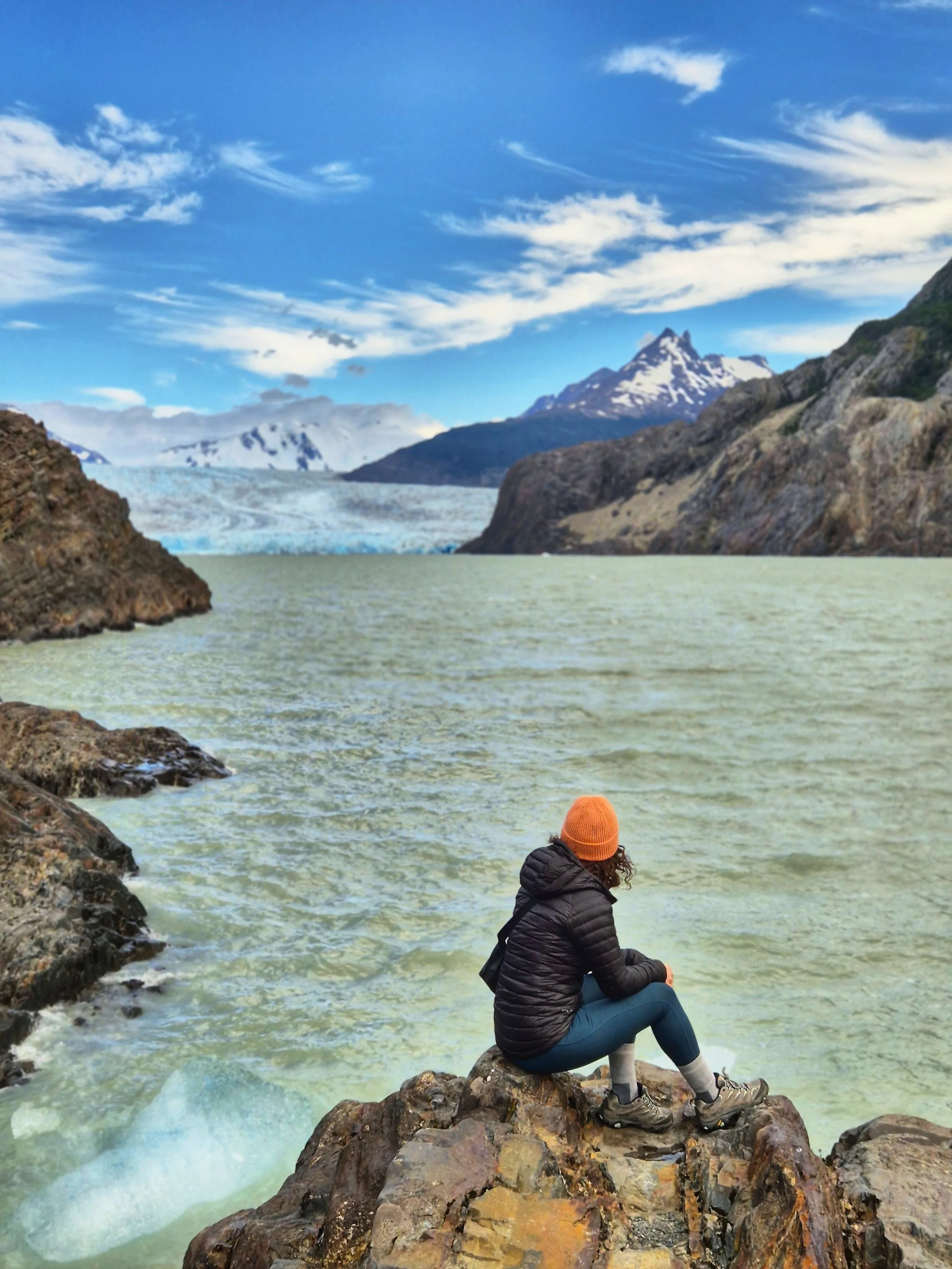
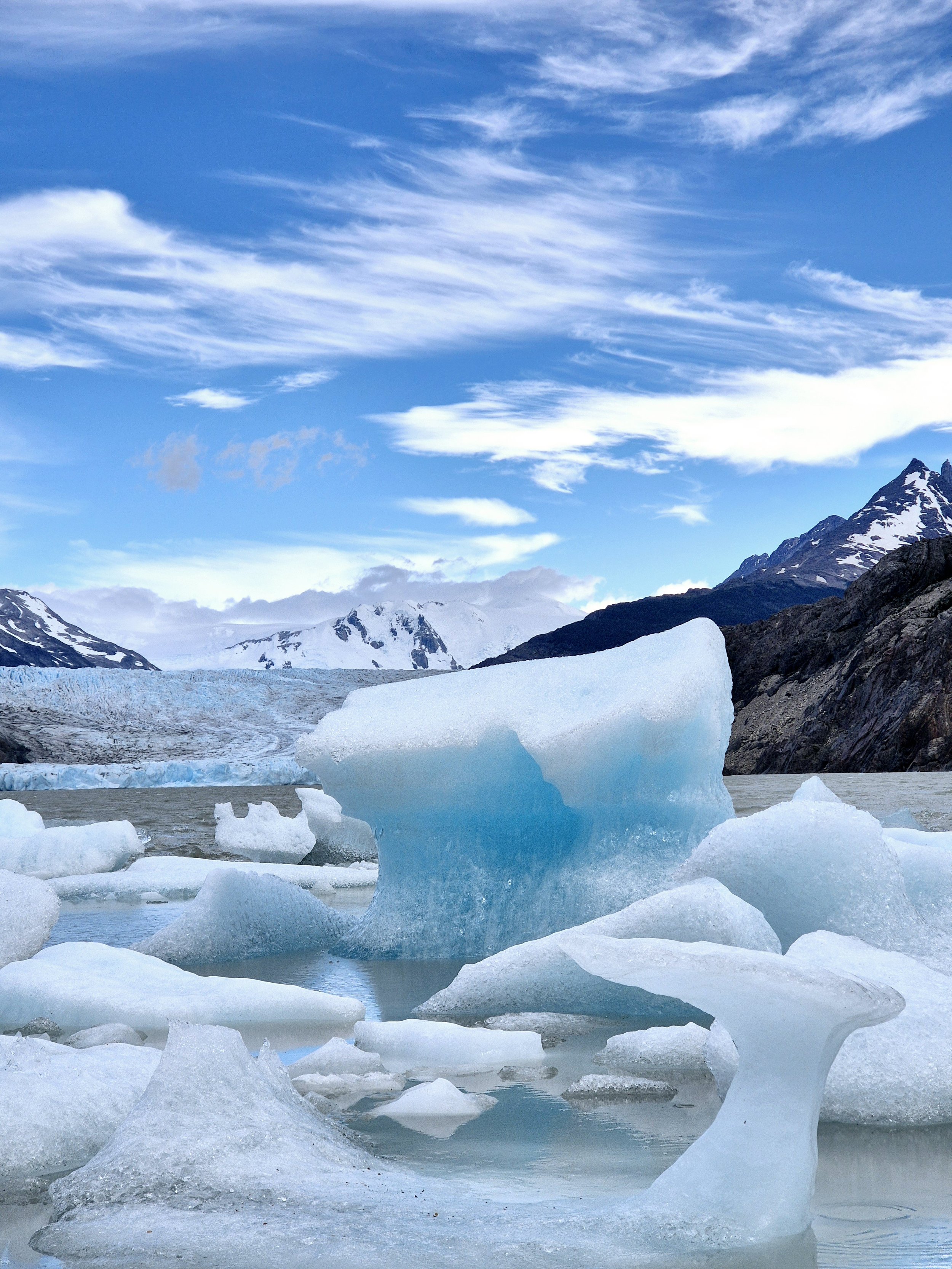
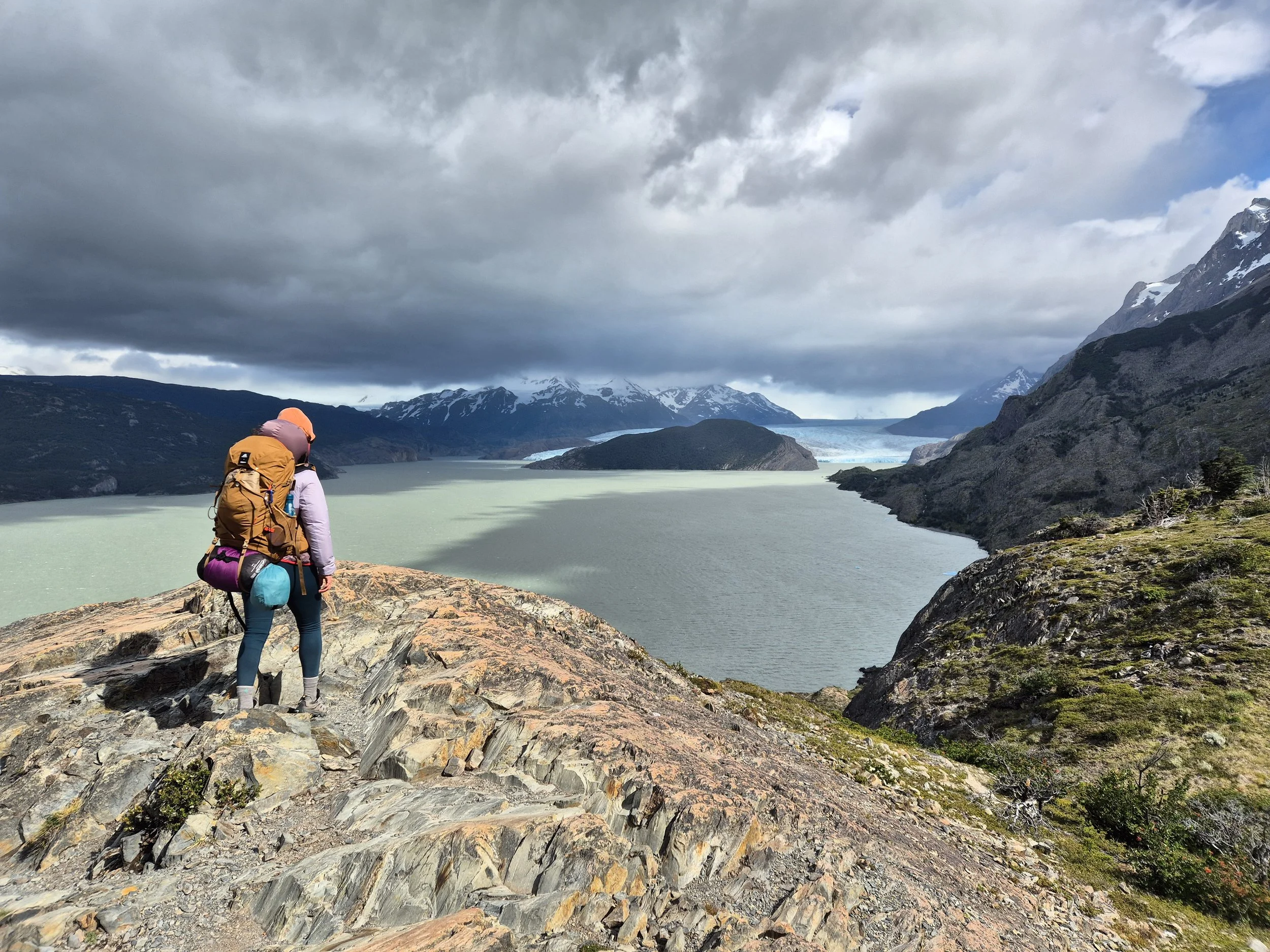
Glacier Grey, Torres del Paine
From Ireland to the end of the world
Our journey began with a flight from Dublin to Santiago, Chile (British Airways via Heathrow). After landing in Santiago, we spent a few hours soaking up sunshine and high temperatures, a very welcome change from Ireland’s grey December skies, before flying south to Punta Arenas with LATAM. Arriving late at night, greeted by darkness and wind, really did feel like landing at the end of the world and the perfect start to a true adventure.
We spent one night in Hospedaje Magallanes, a great, central hostel with private rooms just a few minutes’ walk from the coach station. It was ideal for catching up on sleep before starting our five-day point-to-point hike in Torres del Paine.
Punta Arenas → Puerto Natales → Torres del Paine
On Day 2, we took the early morning bus from Punta Arenas to Puerto Natales (around 3.5 hours). The journey itself is stunning, passing vast steppes, distant mountain ranges, and plenty of guanacos along the way. While you can fly directly from Santiago to Puerto Natales, the airport there is small and prone to cancellations, so we decided not to risk it. For booking buses in Patagonia, Busbud was invaluable throughout the trip.
Puerto Natales is a small but buzzing town on the edge of the Última Esperanza fjord and acts as the main gateway to Torres del Paine. It has a relaxed, outdoorsy feel, excellent food, good coffee, gear shops, and plenty of hikers passing through, the kind of place where everyone seems to be swapping trail tips over dinner.
Cactus Coffee, Puerto Natales
To make packing easier, we pre-arranged luggage storage with Factoria Patagonia, where we would also stay after finishing the W Circuit. For a few dollars per day, we left behind everything we didn’t need on the W Circuit, allowing us to hike with lighter packs. We also rented sleeping bags from Rental Natales, ordering and paying online in advance so everything was ready for collection before heading into the park (you’ll need a credit card for the deposit when you collect your gear).
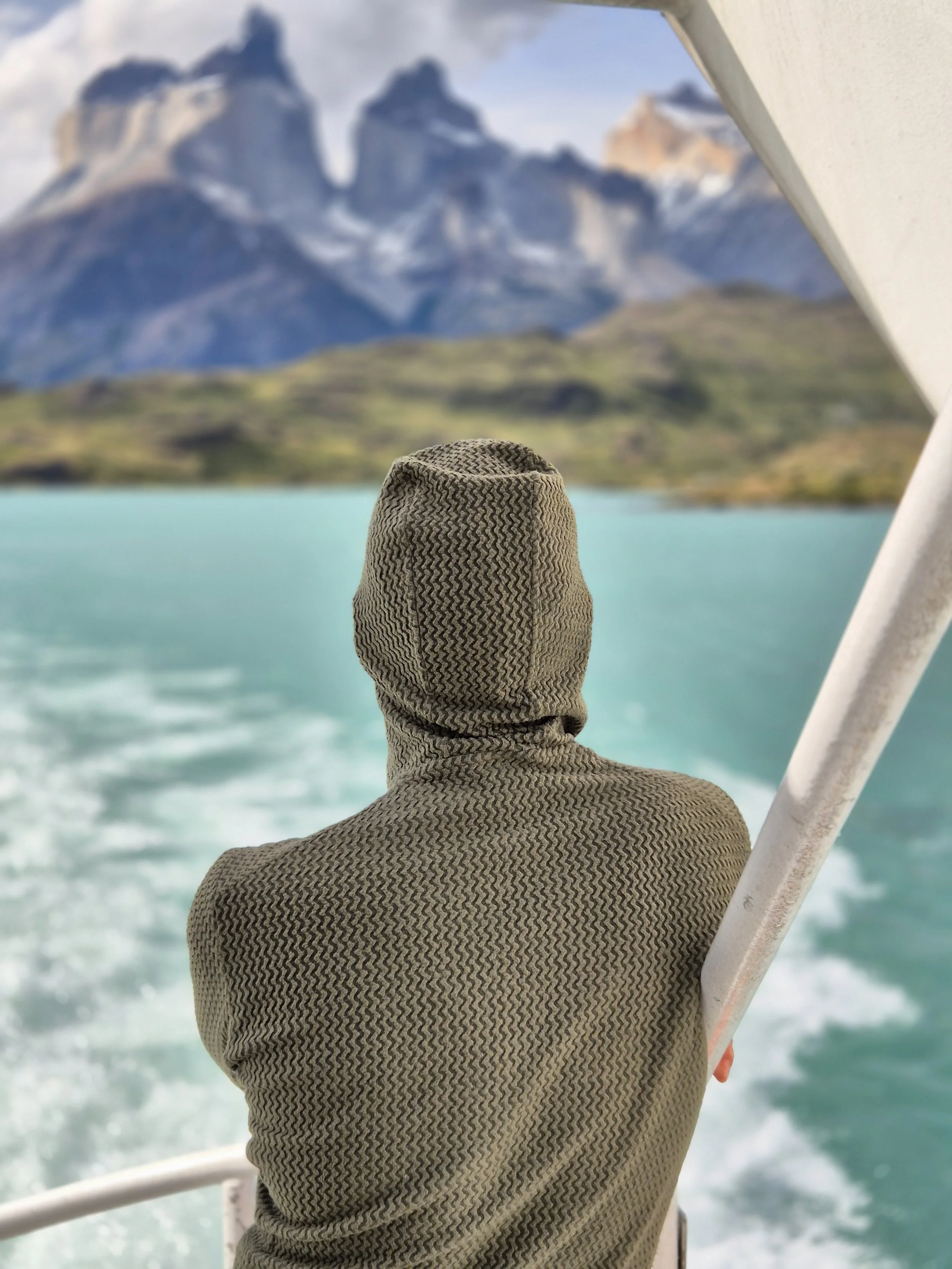
The bus from Puerto Natales to Torres del Paine National Park takes about 1.5 hours. Depending on where you’re starting your hike, you’ll get off at different stops. We began the W Circuit at Paine Grande, so we got off at Pudeto and took the catamaran across Lake Pehoé to the Paine Grande refugio and campsite.
Lake Pehoé
Days 2–7: The W Circuit, Torres del Paine
W Circuit Torres del Paine
We hiked the iconic W Circuit west to east, beginning with a ferry ride from Pudeto across the vivid turquoise of Lake Pehoé. The catamaran connects the Pudeto sector with the Paine Grande refuge and campsite, and the journey alone feels like a highlight, granite peaks rising sharply from the water, the Paine Massif and Cuernos del Paine reflected in the lake, and the sense that the adventure is truly beginning.
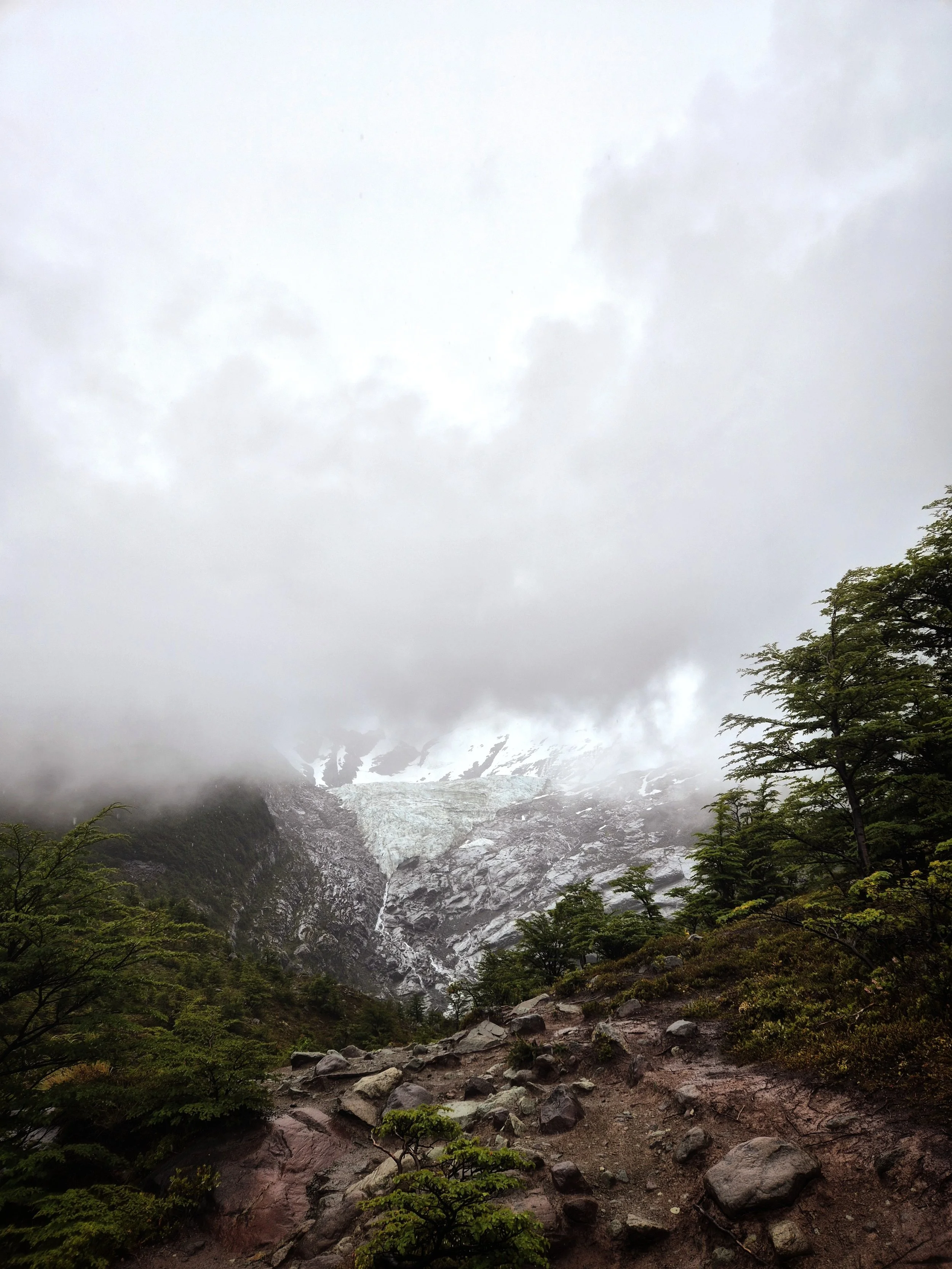
On Day 3, from Paine Grande, we trekked 11km north toward Glacier Grey, following the shoreline as the landscape slowly opened up to reveal floating icebergs and the vast, creaking glacier itself. We spent the night camping in a little yellow tent under the shade of a tree after a night meeting fellow hikers and sharing pizza and drinks.
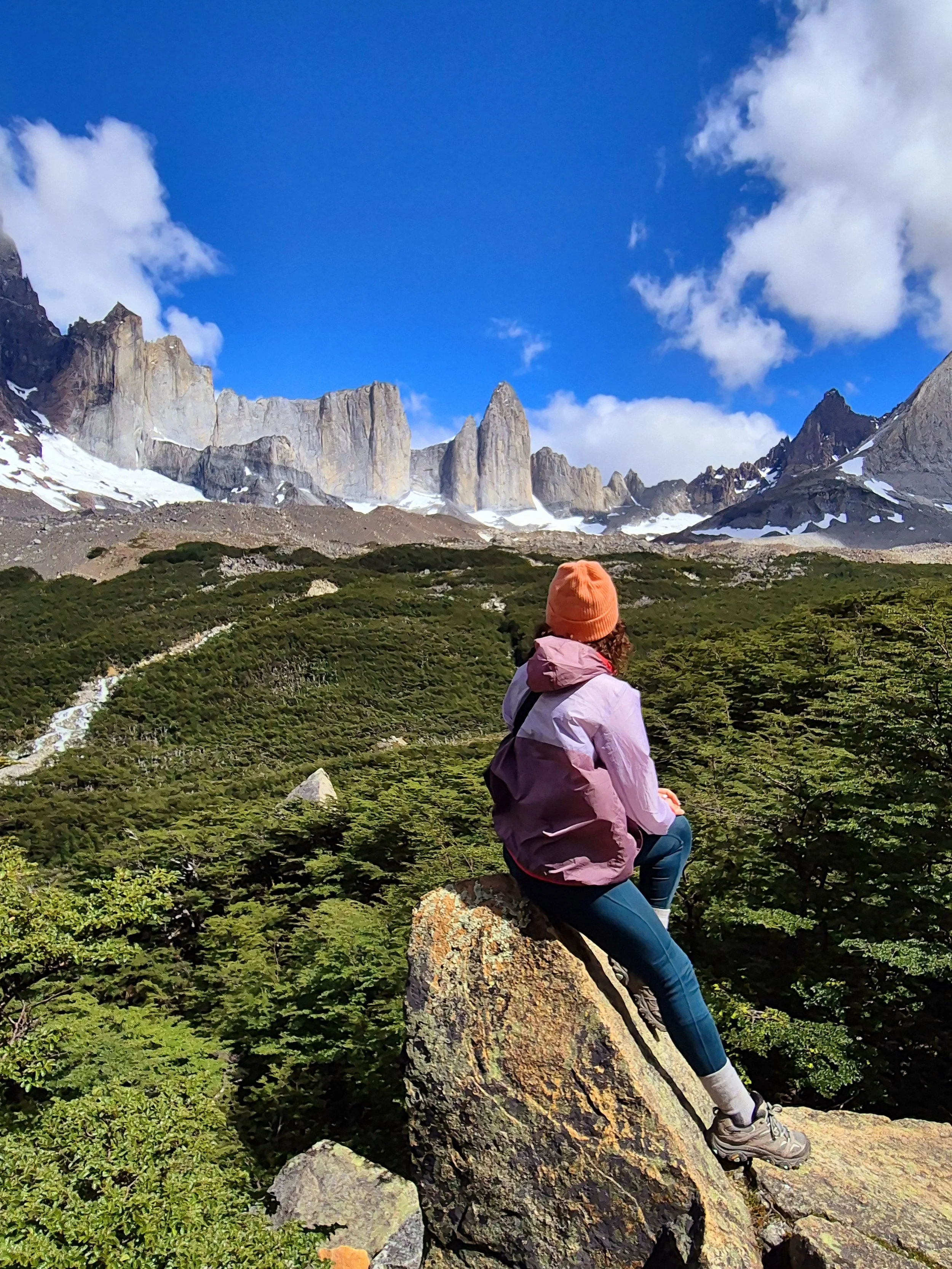
Day 4 saw us return to Paine Grande for one night before heading into the dramatic French Valley on Day 5, climbing as far as Mirador Británico, where we stood beneath towering granite walls streaked with ice and snow, listening to the crack and pop of Glacier Francés echo through the valley.
The trail then carried us east through ever-changing scenery, lenga forests, rushing rivers, and jagged peaks, to Los Cuernos, where we spent the night in a cabin by a waterfall under “the horns” of the mountain. This is one of the longest distance and toughest walking days, at 25km, but Mirador Británico is optional so you can skip it and walk directly to Los Cuernos.
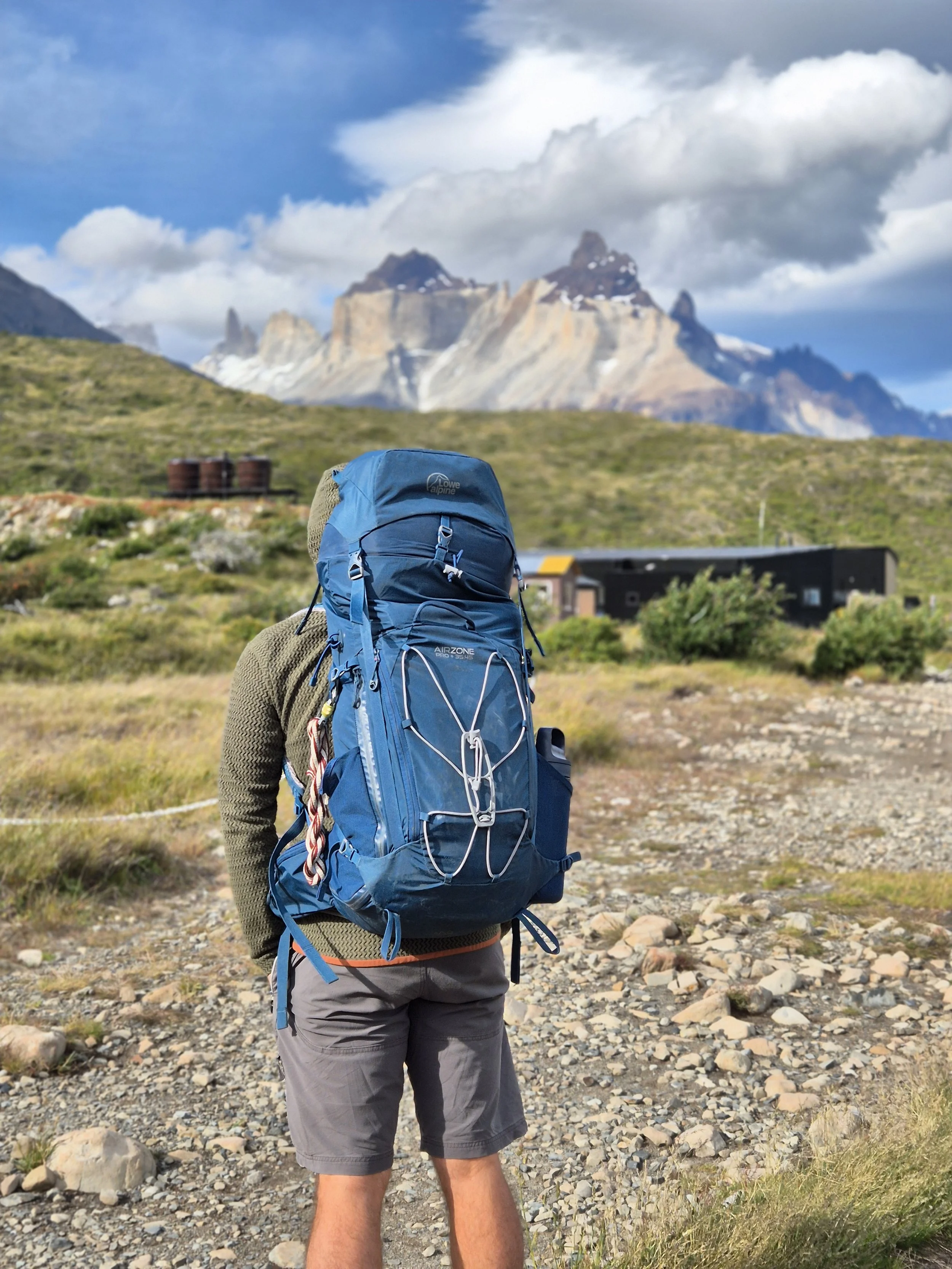
Day 6 took us onward to Chileno, past jewel coloured lakes and through wild flower meadows for 15 km. From there, the circuit culminates at the Central Sector and the most famous sight in the park, Las Torres themselves.
We chose to hike the W Circuit in this direction very intentionally. Ending the trek at Chileno meant finishing our journey with sunrise at Mirador Torres. You’ll find some practical tips at the end of this article that will help you get the most out of the W Circuit.
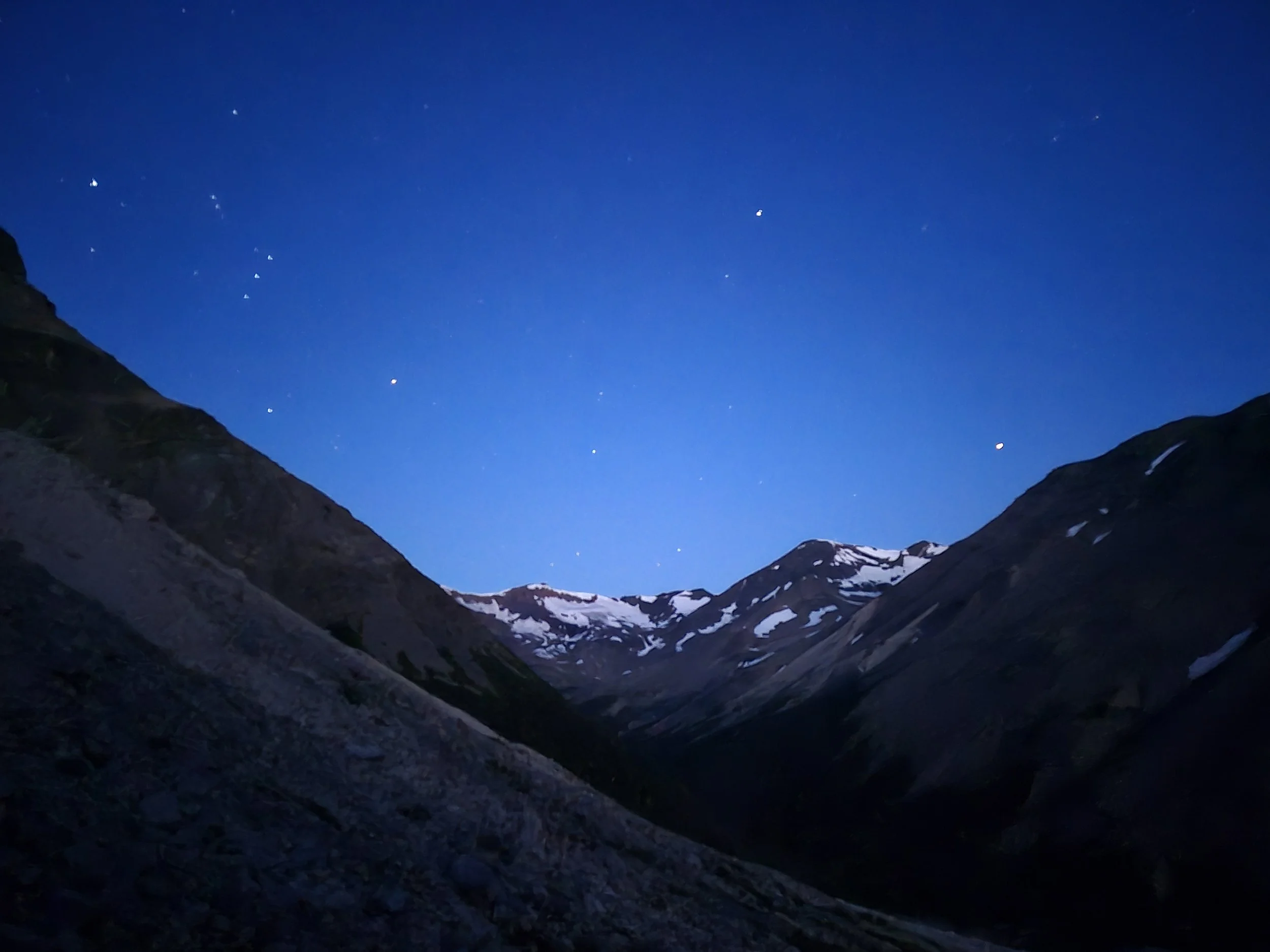
Along the way, we slowly formed a little trail family, and together, on Day 7 we left our tents at Campsite Chileno at 3 a.m., day packs stuffed with layers (it is very cold at the top) and head torches switched on as we began the climb in darkness. I loved looking around and seeing the tiny lights from other hikers’ torches bobbing quietly up the mountain, a silent procession, all moving with the same goal.
At the summit, around thirty of us sat huddled together, patiently waiting for the sun to rise and touch the tips of Las Torres. We chatted softly, shifted our weight to stay warm, and focused on being present. When the sun finally appeared, it was worth absolutely everything; the early alarm, the cold, the climb. As the granite towers slowly turned from grey to orange to soft pink, it felt almost unreal.
The W Circuit is a journey of constant contrast, glaciers, valleys, lakes, and spires, with each day revealing a completely different face of Patagonia’s wild heart. It challenged us physically, rewarded us endlessly, and gave us moments of connection - with nature, with strangers turned friends, and with ourselves - that are hard to put into words.
Las Torres
Refugios & campsites we stayed in
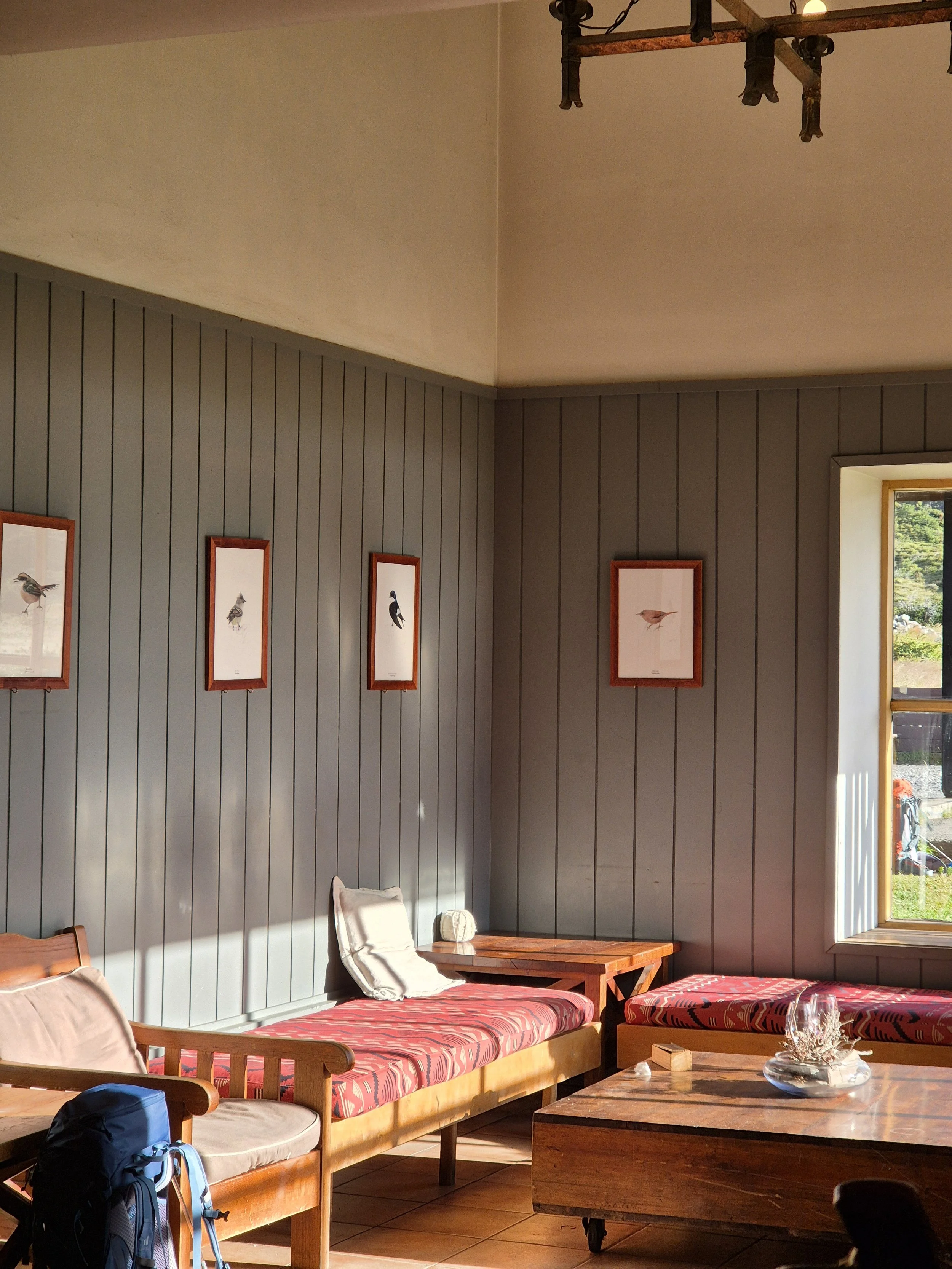
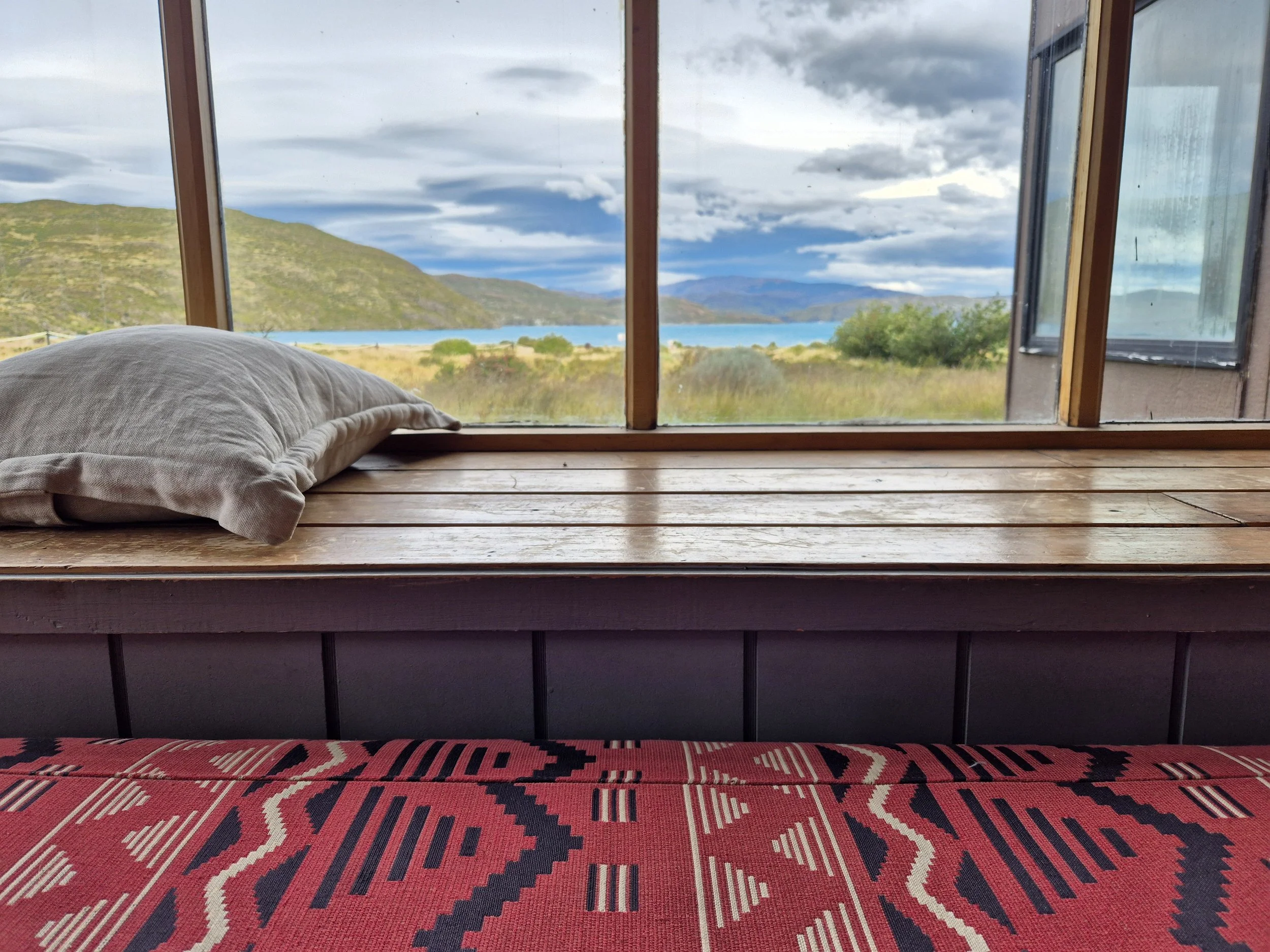
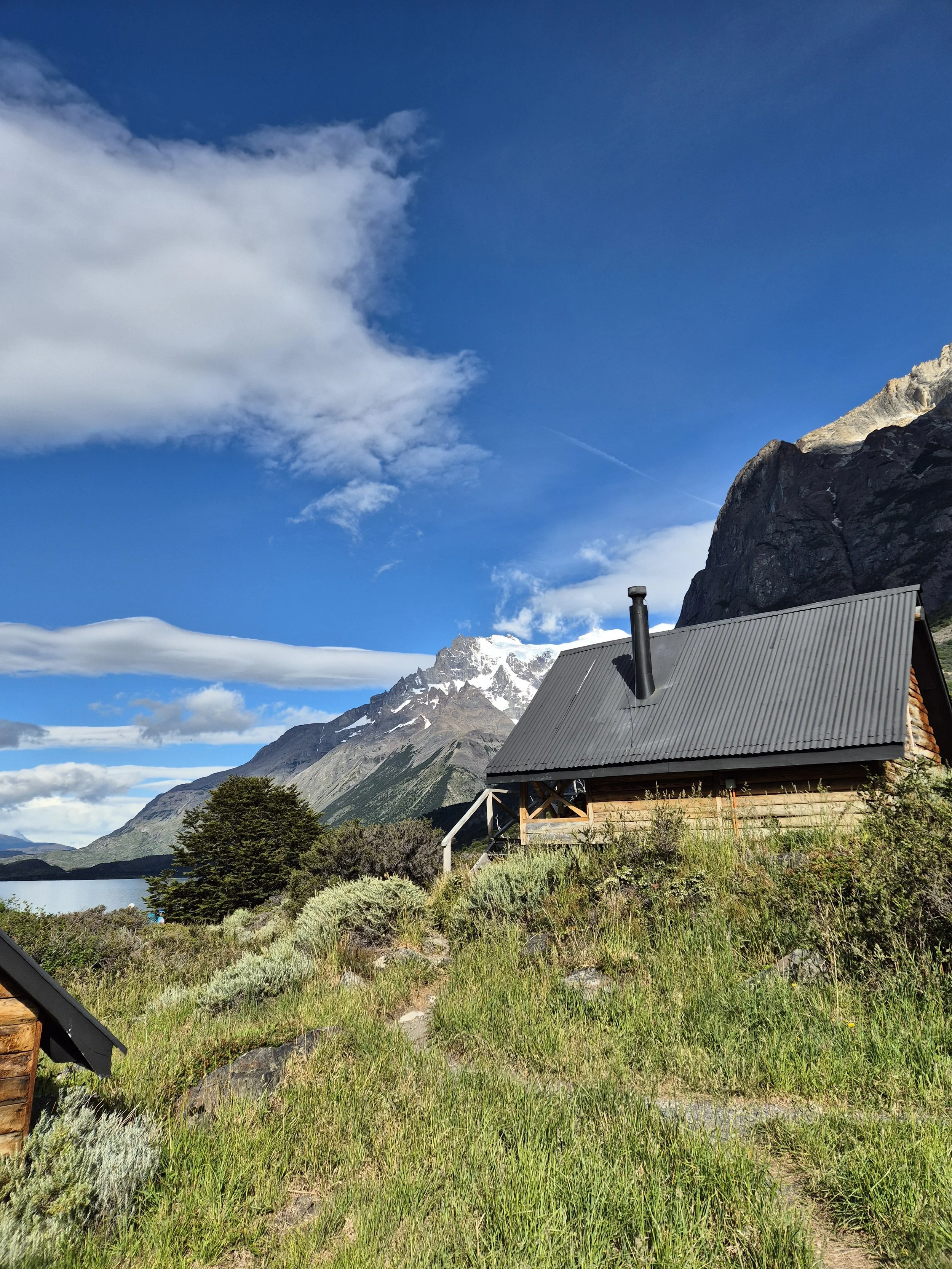
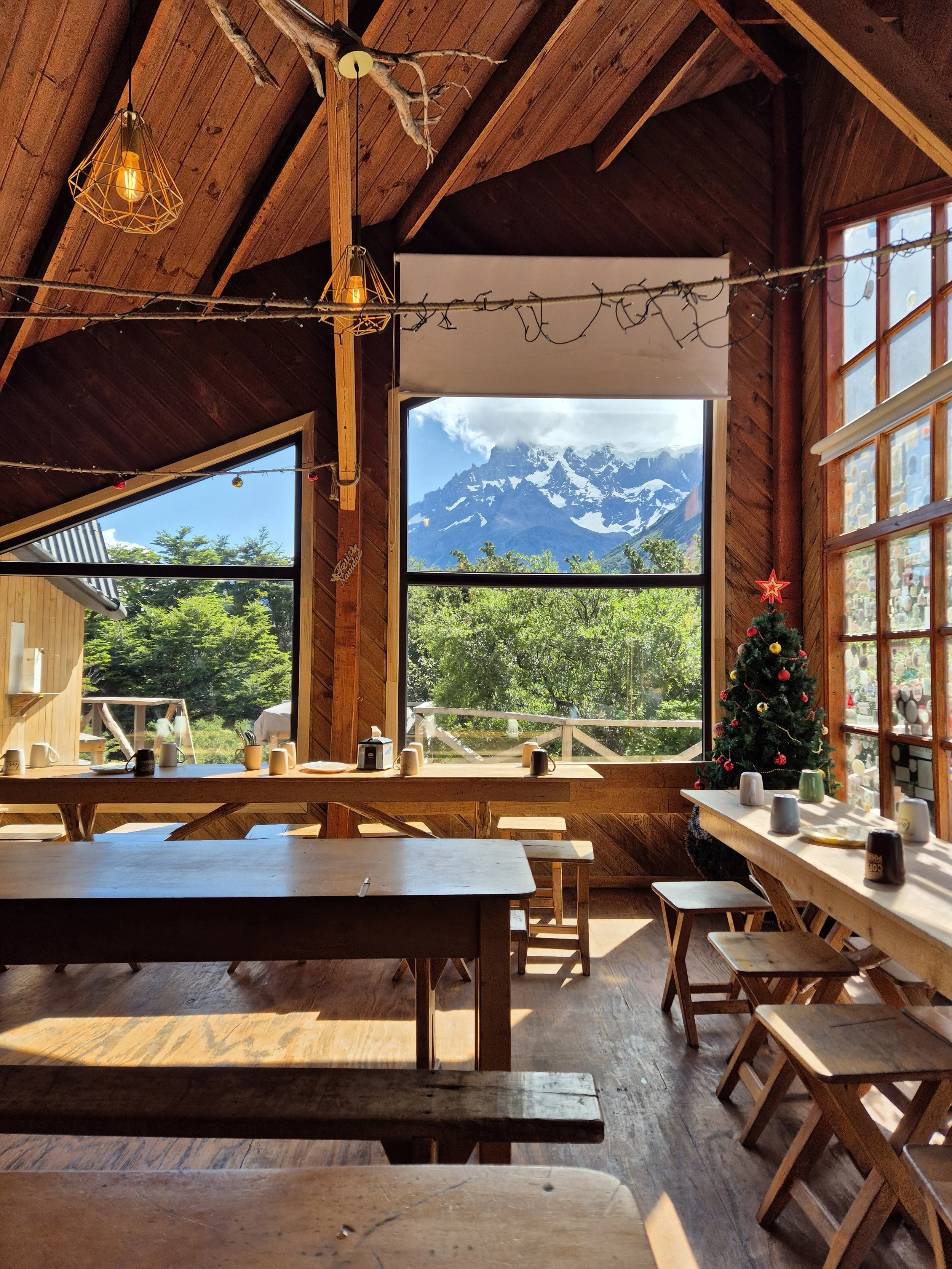
Puerto Natales & onward to Argentina
On Day 7, we returned from Torres del Paine to Puerto Natales to hand back our rental gear, enjoy a proper hot shower, good food, and a brilliant night’s sleep at Factoria Patagonia.
On Day 8, we crossed into Argentina, taking the bus from Puerto Natales to El Calafate coach station. From there we grabbed a taxi to the airport, where we picked up our hire car. We drove across the wide, flat roads of Argentine Patagonia to El Chaltén, a small town that feels like a surfer village dropped into the mountains. The town is only 40 years old and was originally developed by climbers returning to these dramatic granite peaks.
We stayed at Hospedaje Mi Rincón, a lovely family-run guesthouse where the owners genuinely take time to help you plan your hikes. El Chaltén has an excellent food and drink scene for such a small place: Laborum for pizza is an absolute must (so many people we met on the W Circuit recommended it), plus great microbreweries and coffee shops. Don’t miss Banneton Bakery or Cervecería Artesanal Chaltén (booking essential). There are also plenty of hiking shops in town, so if you need to rent gear or pick up essentials, you’re well covered.
Cervecería Artesanal Chaltén
Hiking around El Chaltén
Day 9 was the only rainy day of our trip, so we took a bumpy drive across the Río Eléctrico and did a shorter hike to Mirador del Glaciar Piedras Blancas, followed by drying off in the cosy bar at the end of the trailhead.
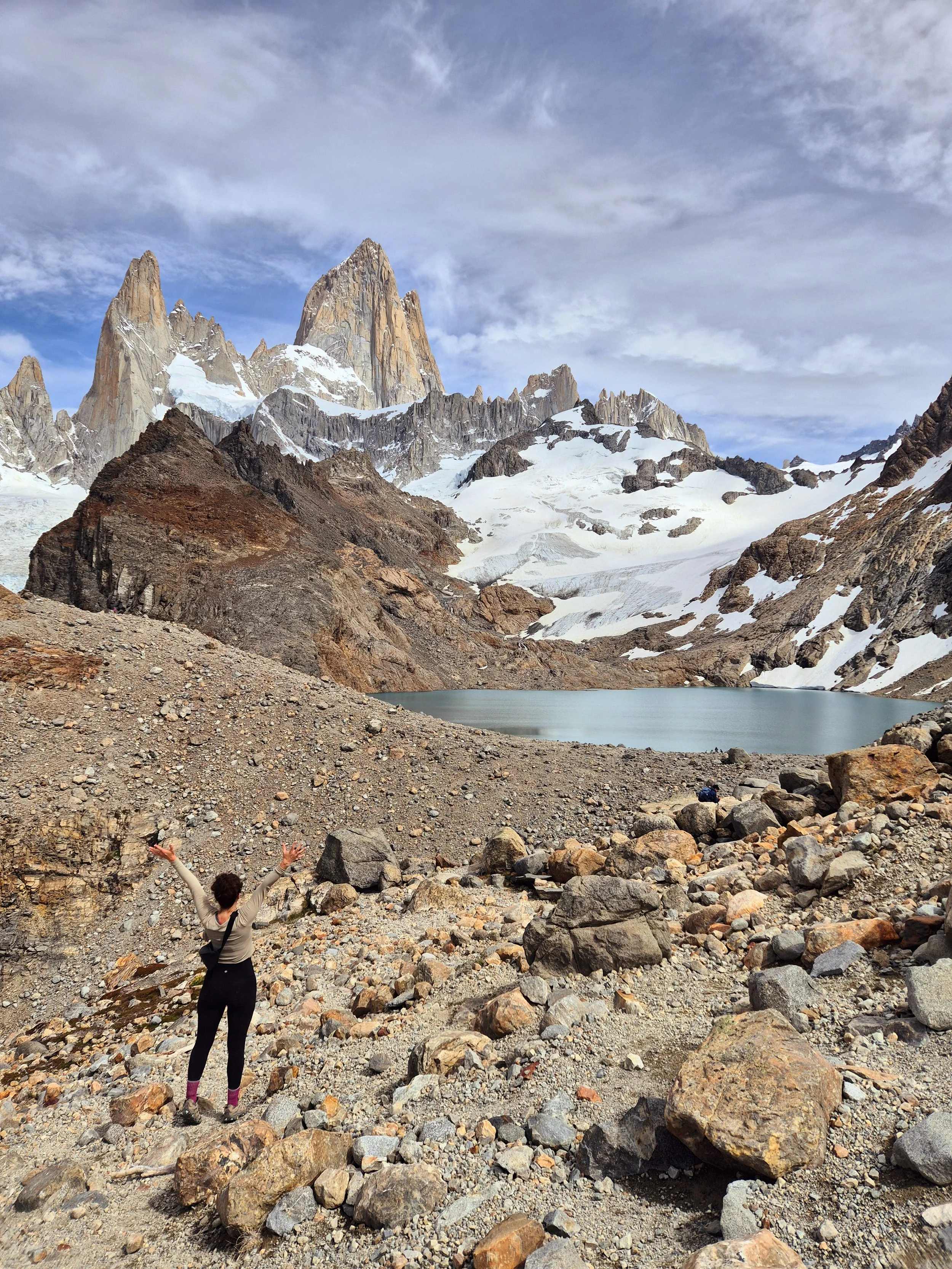
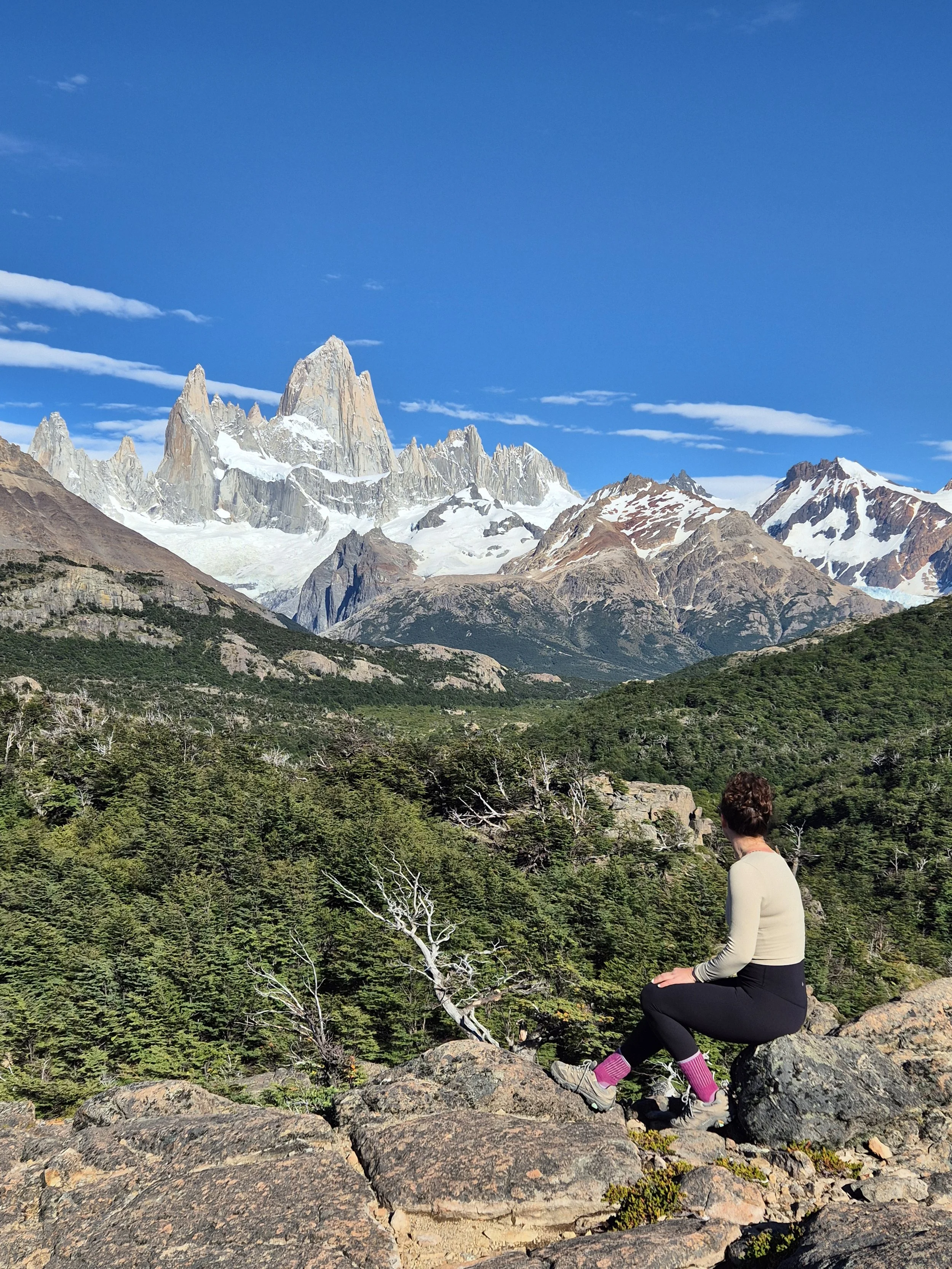
On Day 10, we tackled the hike to Laguna de los Tres. If you’re staying in El Chaltén, you can start this hike directly from town. The trail is an out-and-back route of around 20 km, with roughly 1,000 m of elevation gain. The scenery constantly changes as you climb, forests, rivers, open valleys, until the final ascent delivers one of Patagonia’s most iconic views: the turquoise lake sitting beneath the towering granite spires of Fitz Roy.
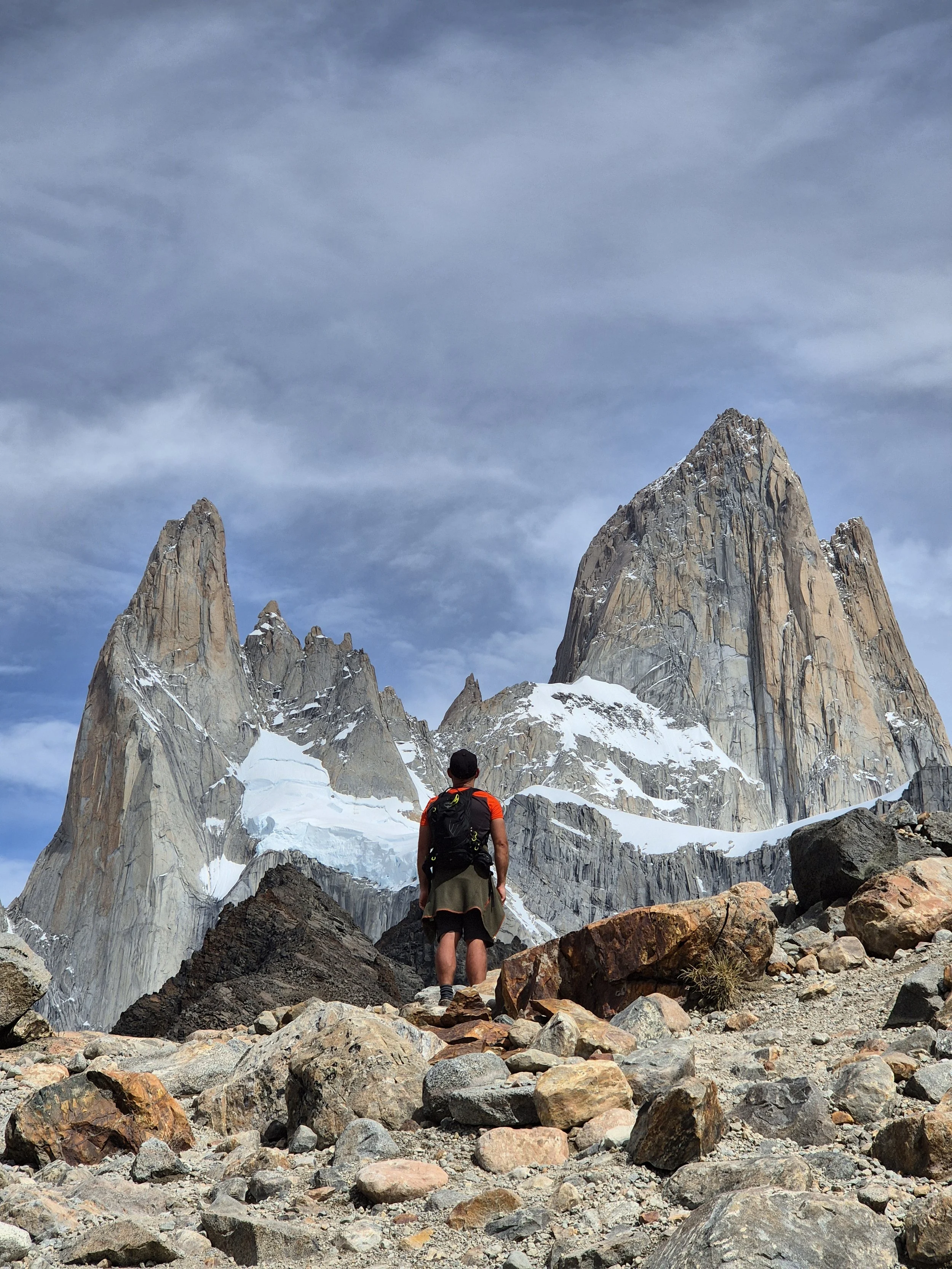
Day 11 was the highlight of the entire trip: our hike to Fitz Roy. We recommend driving the short distance to the trailhead car park - you’ll thank yourself on the way back. This is a challenging hike, with the final 1.5 km accounting for a huge chunk of the elevation gain (around 500 m) and forming the crux of the route. You need to be fit and confident not just for the ascent, but also for the steep descent (we saw plenty of people struggling on the way down). The reward at the top is unforgettable! Vivid turquoise water, towering granite peaks, foxes wandering nearby, and a spectacular waterfall. Total distance is approximately 24 km, taking 8–10 hours depending on pace and conditions.
Fitz Roy
El Calafate & Perito Moreno Glacier
On Day 12, we spent the final part of our Patagonia time in the larger town of El Calafate, staying two nights to make sure we saw the famous Perito Moreno Glacier and have time to enjoy the town’s microbreweries. We stayed at Hostal Schilling, a comfortable and welcoming base before moving on to the next chapter of our journey.
Perito Moreno Glacier
From Patagonia to the wine region
On Day 13, we said goodbye to Patagonia and flew from El Calafate to Mendoza via Buenos Aires with Aerolíneas Argentinas. A word of advice: be prepared and stay flexible, the airline is known for last-minute schedule changes. That said, the customer service was excellent, and after a slightly strange rerouting of our journey, one quick phone call had everything sorted.
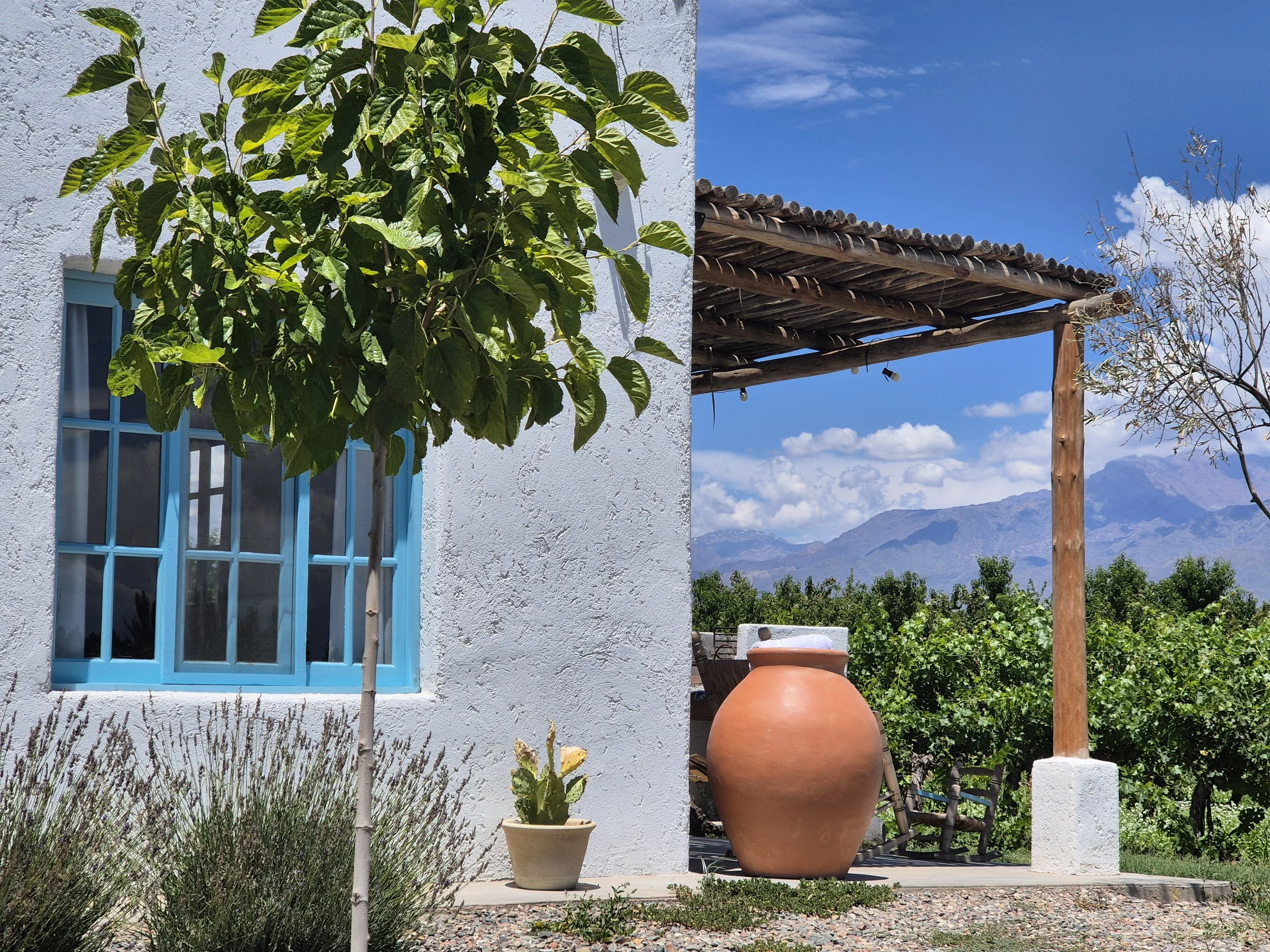
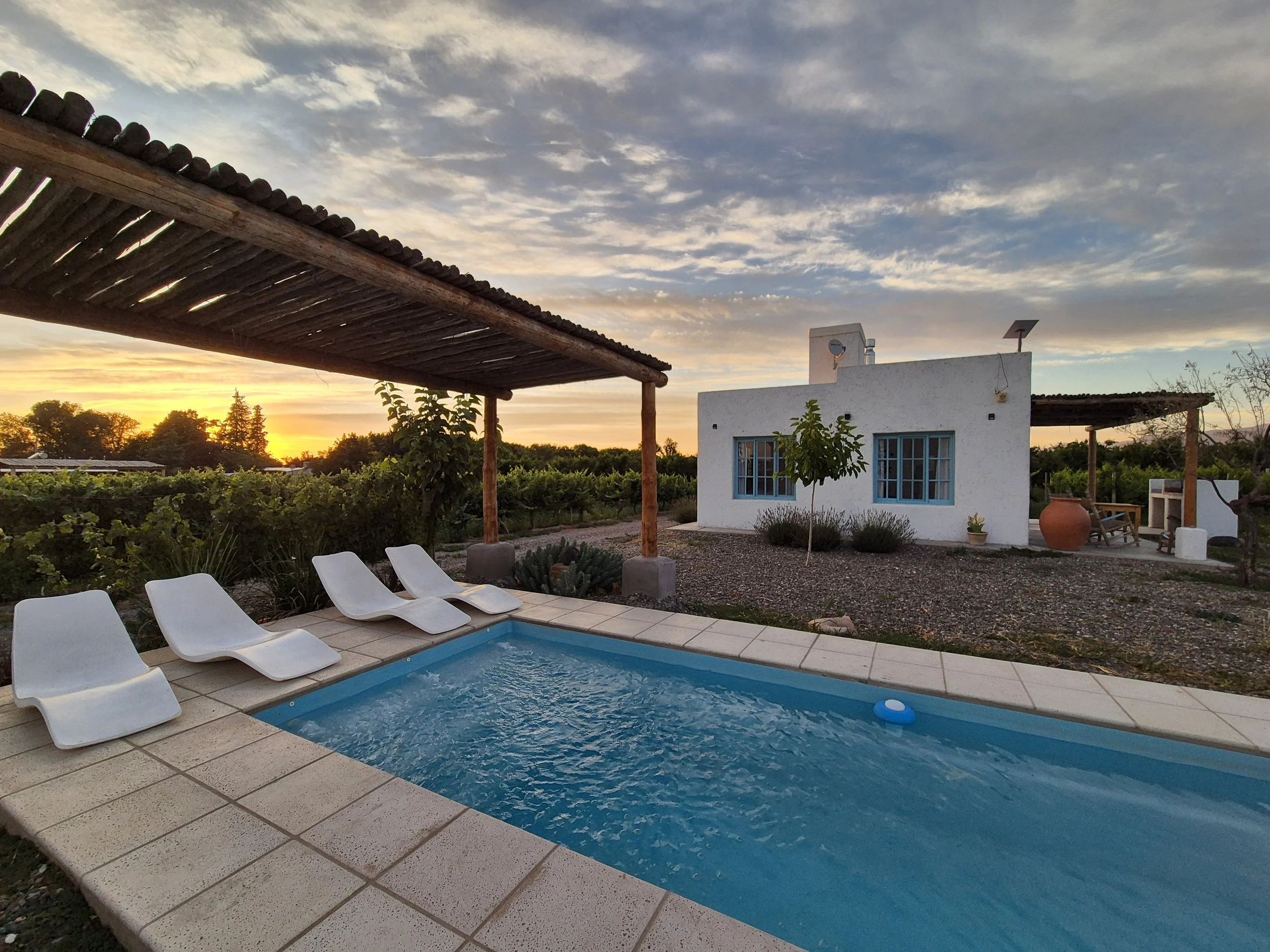
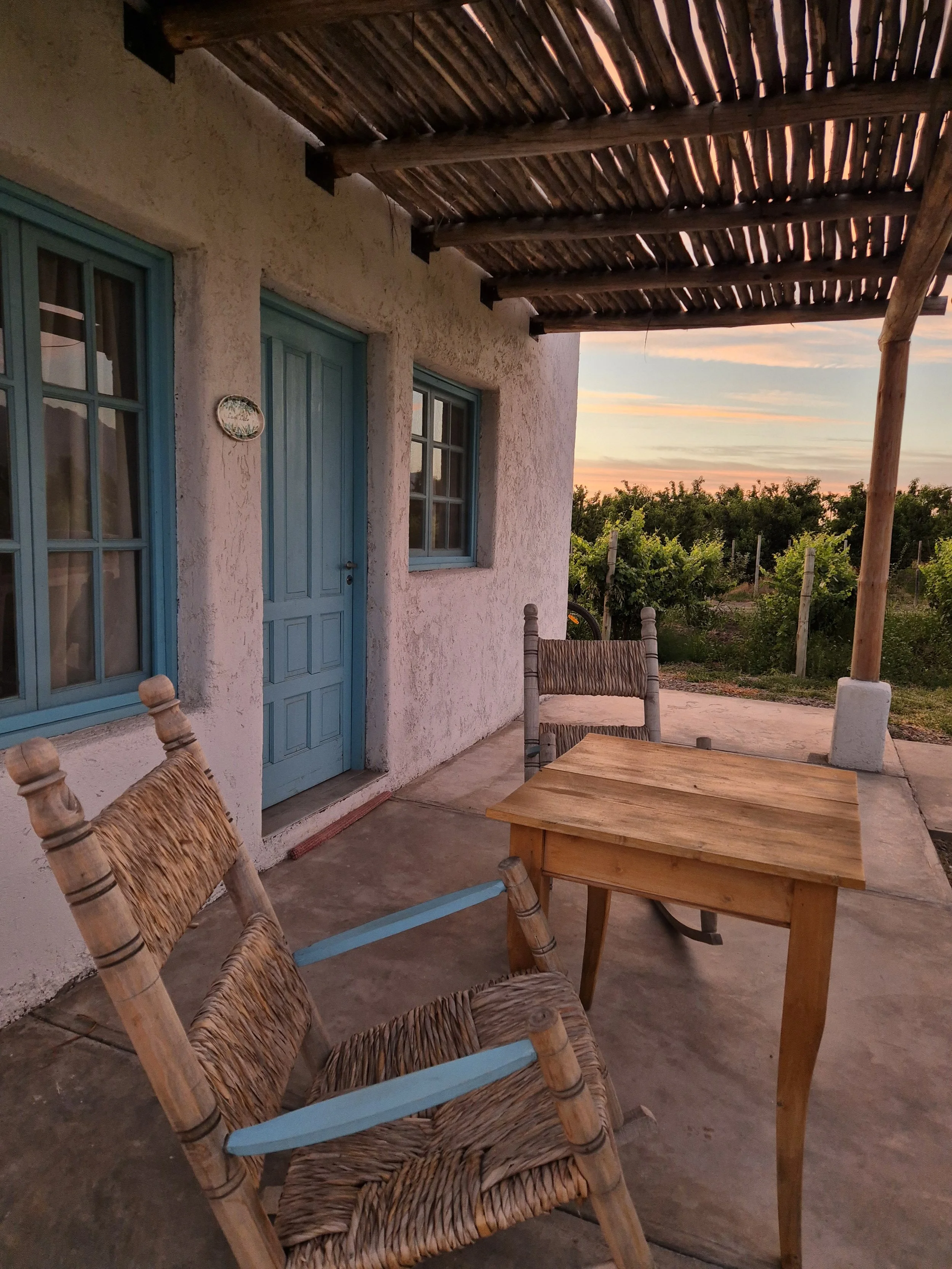
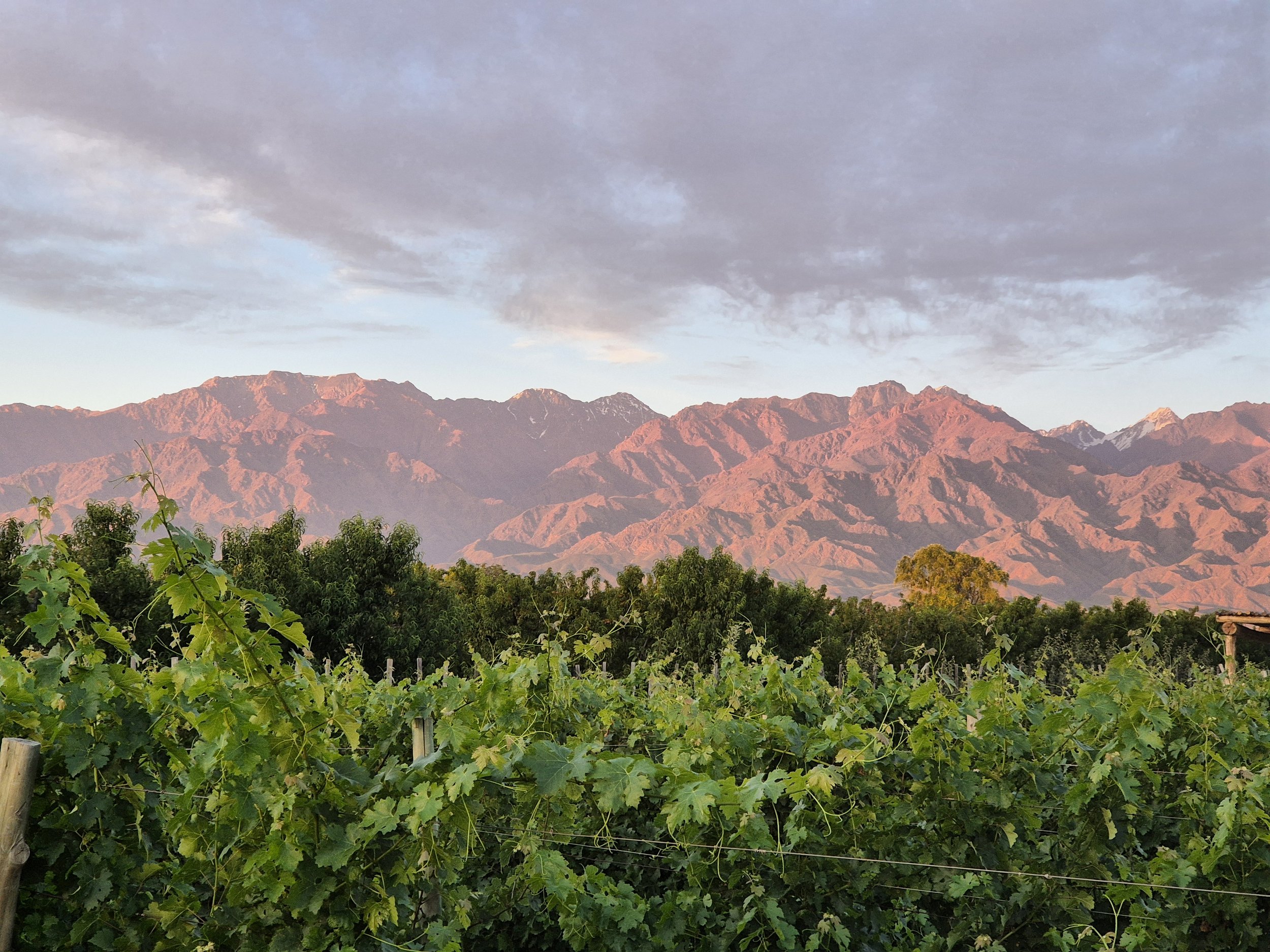
Arriving in Mendoza, and very deliberately not hiring a car (it is wine country after all), we grabbed a taxi from the airport to Tunuyán, in the heart of the Uco Valley. The journey takes around an hour and cost $60. We spent three glorious wind-down nights at Finca Rosablanca, a beautiful farm nestled in a private vineyard, run by Julián and Marijke, a warm, generous couple who clearly love the land, horses, and the slower pace of life. Our home was a whitewashed finca surrounded by vines, with uninterrupted views of the Andes stretching endlessly behind it.
After almost two weeks of hiking and constant travel, this slower rhythm was exactly what we needed. Mornings were spent with coffee on the terrace, afternoons cooling off in the pool, and breakfasts made from fruit picked straight from Julián and Marijka’s garden. Without a car, Julián kindly organised bikes for us, which made for blissful cycles into the nearby town of Vista Flores for groceries and easy, carefree rides between vineyards.
During our stay, we had two standout dining experiences at Claroscuro Bodega de Arte and Bodega Piedra Negra, both unforgettable for their food, wine, and setting. One of the most memorable experiences of the entire trip was a sunset horseback ride into the Andes with Aquiles Goulú, a local gaucho whose deep connection to the land made the experience even more special.
What stood out just as much as the landscapes was the kindness of the people we met along the way in Mendoza, being given lifts when we needed one, gifted bunches of fresh herbs in the local vegetable shop, or invited into someone’s home to be cooked for and entertained. Mendoza, and especially the Uco Valley, is a truly magical place, and one that has stayed with us.
On Day 16, we flew from Mendoza back to Santiago, allowing ourselves one final night in the city before heading home. We returned feeling deeply nourished by the experiences we’d had, the people we met, the friendships formed, the landscapes traversed, and the moments that quietly left their mark. It was a trip that touched our hearts and will forever stand out as a once-in-a-lifetime adventure.
Practical tips for hiking the W Circuit
Book everything well in advance. Campsites and refugios in Torres del Paine must be pre-booked, often months ahead in peak season (December–February). There are two main operators, Vertice Patagonia manages the western side of the W (Paine Grande and Grey) and Las Torres Patagonia manages the eastern side (Francés, Los Cuernos, Chileno, Central Sector). Frustratingly, there is no centralised booking system, the two operators release availability separately, don’t coordinate dates, and typically only announce release information via Instagram. To make life easier, sign up to the torreshike mailing list, which is one of the most reliable ways to be notified as soon as reservations open.
You must buy your entrance ticket to Torres del Paine National Park in advance on the CONAF website https://pasesparques.cl
Choose your direction wisely. Hiking west to east meant we finished at Las Torres and could do the sunrise hike without needing to double back -100% worth the early start.
Pack for all four seasons, every day. Even in summer, expect strong winds, sudden rain, cold mornings, and intense sun. Layers, a good waterproof, gloves, and a warm hat are essential.
Be flexible and go with the flow. Whatever your plans in the Park, be mindful that the weather is in charge and anything can change. For example, we had booked a kayaking trip on Lake Grey on Christmas morning, but the team at Big Foot knew better than to let us loose on the lake due to strong winds. It’s easy to feel disappointed, but in the end, it’s far better to be safe.
Start early whenever possible. Weather tends to be calmer in the mornings, and starting early helps avoid crowds at popular viewpoints like Glacier Grey and Mirador Británico, and be aware of the ranger’s cut-off times before leaving camp.
Bring a head torch. Essential for the Las Torres sunrise hike and handy around campsites after dark.
Respect park rules: no wild camping and fires strictly prohibited.
Know your limits. The W Circuit is achievable for many hikers, but days like the French Valley and the Torres ascent are demanding. Pace yourself, stay hydrated, and remember you still have to hike back down.
Embrace refugio life. Even if you’re camping, the refugios are social hubs in the evenings; great food, shared stories, and friendships formed over tired legs and cold beers.
This post is dedicated to Calvillo Tovar, Garcia Pimentel, Nadine Lichey, Andreas Von Pein, and Victoria Bond, who tragically lost their lives in Torres del Paine during a freak snowstorm in November 2025. May their memory be honoured, and may they never be forgotten. Go raibh siad ar a suaimhneas.
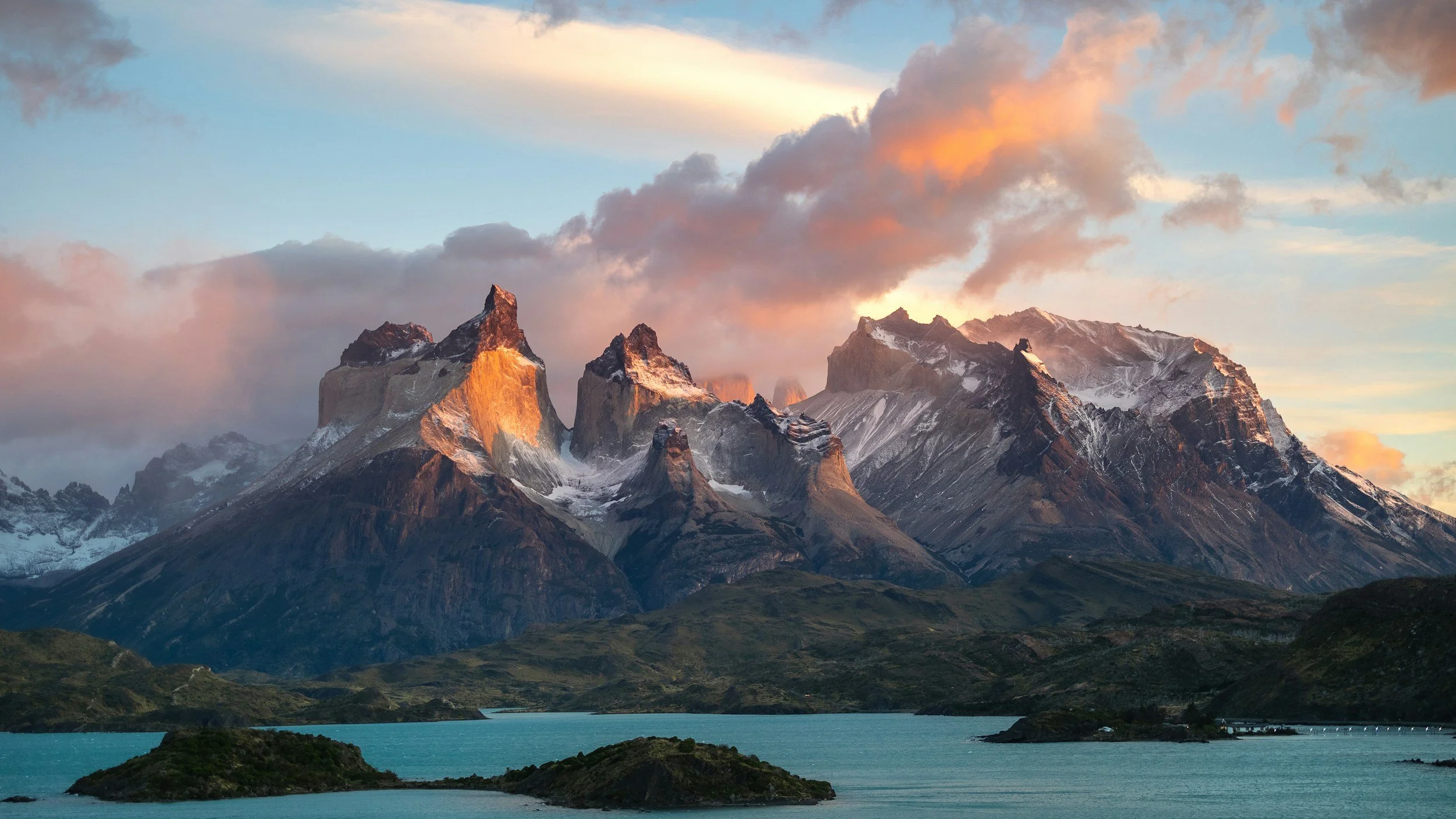
Torres del Paine